
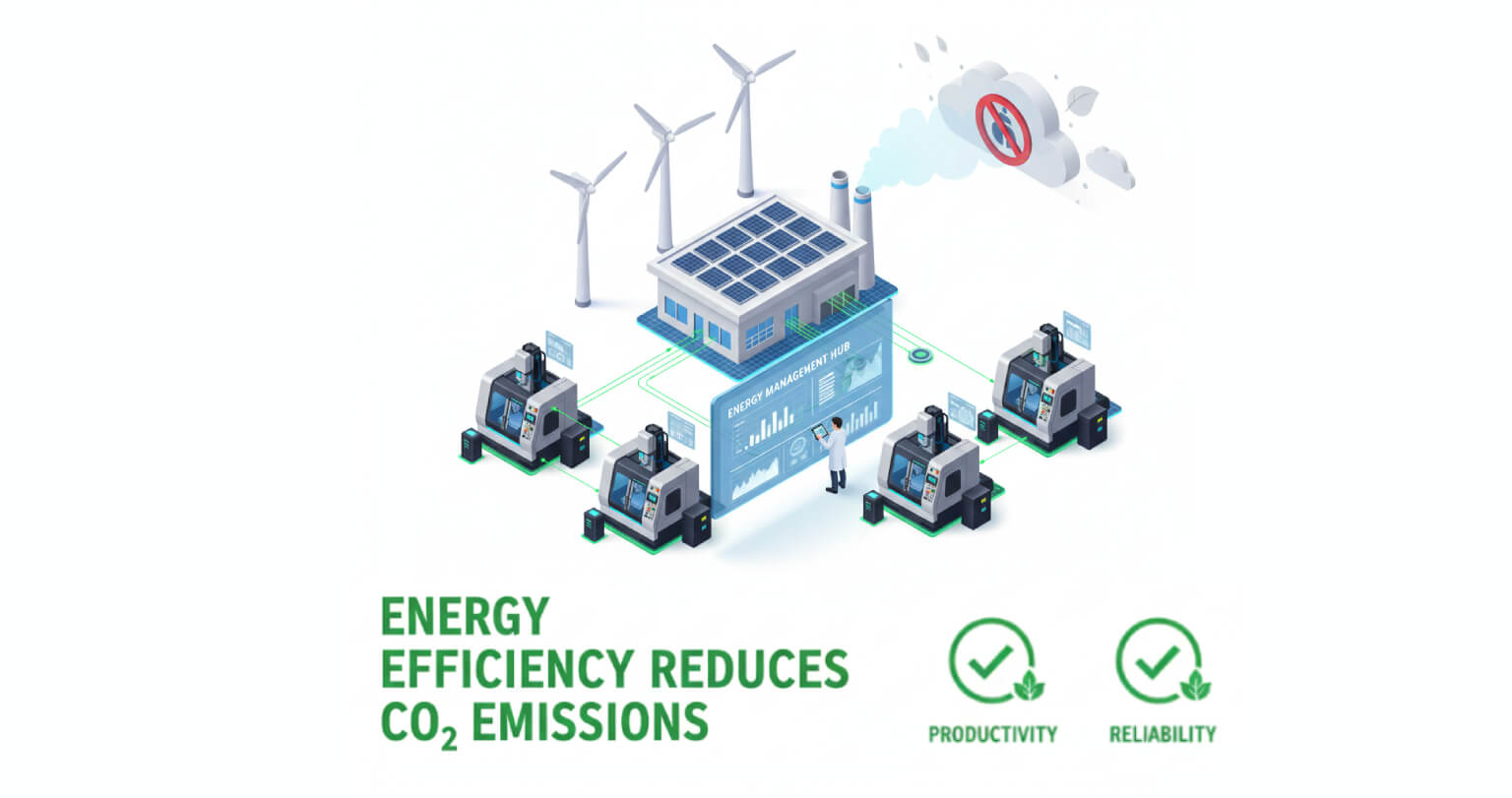
How Energy Efficiency Reduces CO₂ Emissions?
Energy efficiency reduces CO₂ emissions by minimizing energy waste across industrial equipment, processes, and facilities. When industries consume less energy to deliver the same output, reliance on fossil fuels decreases. This directly lowers greenhouse gas emissions, supports decarbonization goals, and enables organizations to achieve sustainability targets without compromising productivity, quality, or operational reliability.
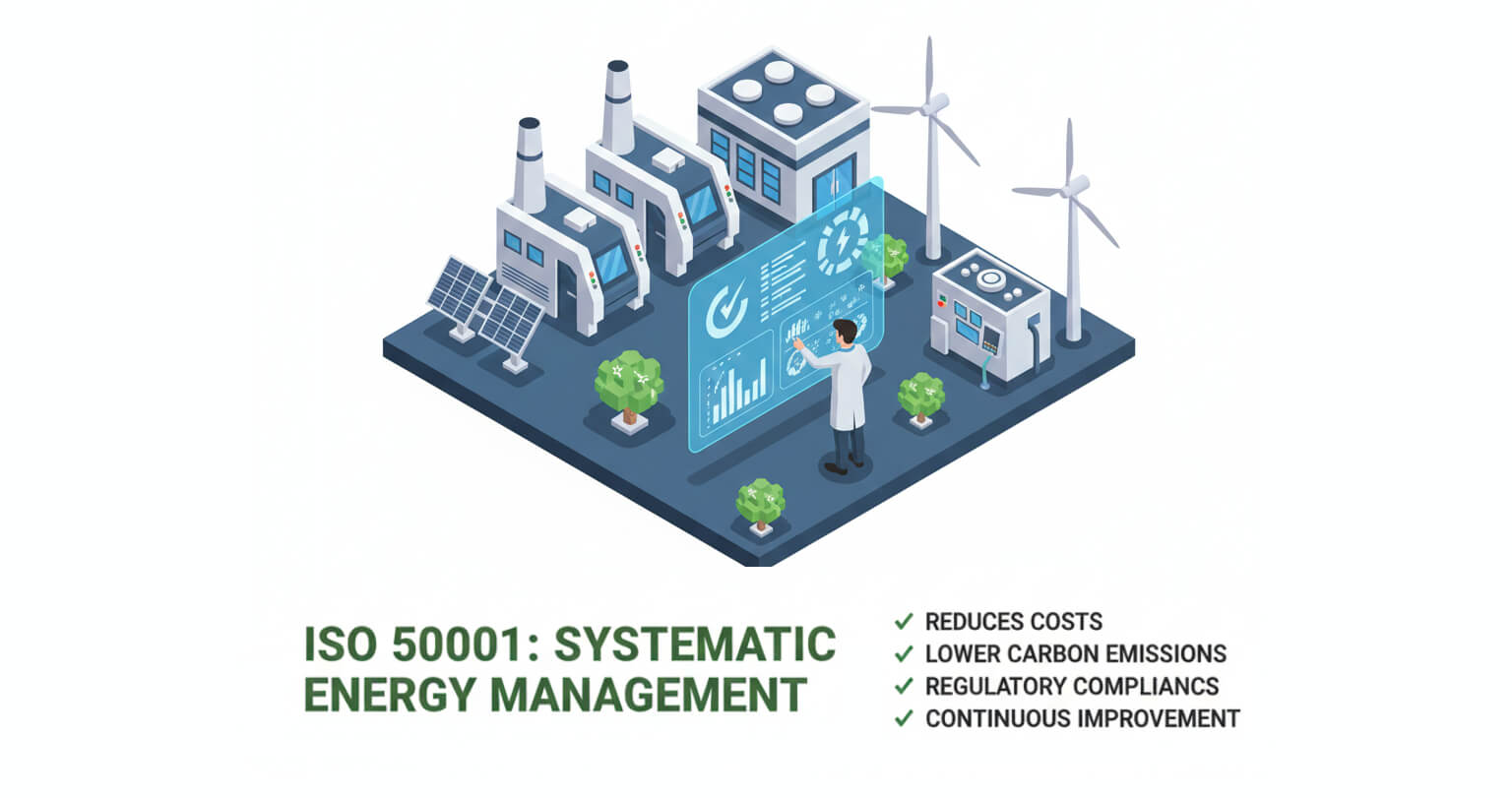
Why ISO 50001 Is Required for Industries?
ISO 50001 is required because it provides a structured and systematic framework for managing energy performance across industrial operations. It helps organizations establish energy baselines, monitor improvements, identify inefficiencies, reduce costs, and lower carbon emissions while ensuring regulatory compliance, audit readiness, and continuous improvement aligned with global sustainability and ESG expectations.